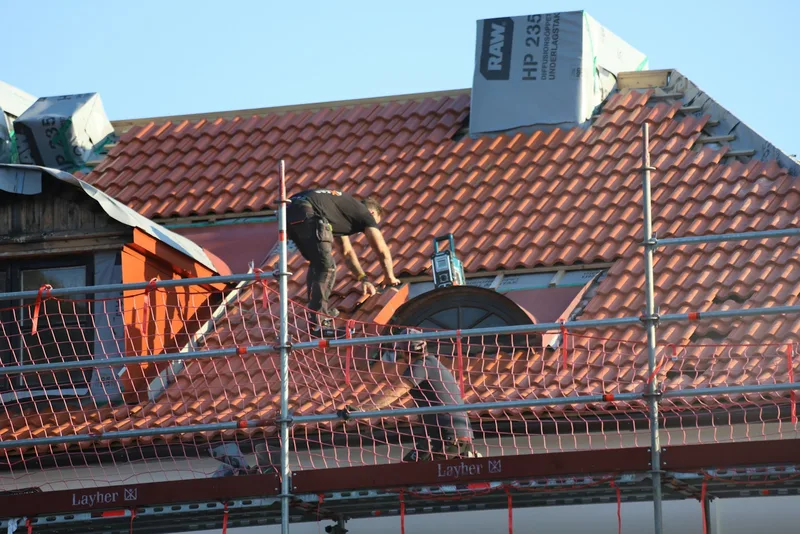
Start with what you can see, and mistrust it a little. A brown ring on a bedroom ceiling in Devon or a damp patch above a hallway in Marysville tells you water got in somewhere, but it almost never tells you where. Water that slips past a flashing or a seam rides along the deck, follows a rafter, and drops through the ceiling wherever gravity and a gap let it. By the time it shows indoors, the entry point may sit several feet uphill, sometimes on a different slope entirely. That gap between symptom and source is where most bad repair money goes: seal the stain, and the leak keeps working quietly above it.
Metal Roofing Fredericton connects homeowners with local roofing professionals who treat diagnosis as the job itself, not as a preamble to it. They work across the city, from Downtown Fredericton and Silverwood to Nashwaaksis, Forest Hill and Southwood Park, and out toward Barker's Point, Skyline Acres and Devon. On a first visit, expect a roof walk, a look in the attic where access allows, and photographs of what failed. A professional who cannot show you the entry point has not found it yet.
A flashing map of your roof
Think of your roof as a set of joints, and ask which joint failed. Chimneys, skylights, plumbing vents, dormer walls and the line where a porch roof meets the main house each need flashing that flexes with temperature swings while staying sealed, and in Fredericton those swings are severe: a January thaw can turn a snowpack to meltwater in an afternoon, then freeze it again overnight. That cycle pries at seals, lifts fasteners and backs meltwater under eaves flashing when an ice dam forms. Older homes on both the northside and the southside add another wrinkle, because additions built in different decades often leave valleys and wall junctions that were never detailed as one system. Add the Saint John River's damp air, which keeps shaded north slopes wet longer, and you get roofs where the weak detail, not the panel field, decides whether the house stays dry.
Some failures are not leaks at all. Warm, moist air from a house can condense on cold attic decking through a Fredericton winter and drip in a pattern that looks exactly like a roof leak from below. A good diagnostic visit separates the two before anyone orders panels, because sealing a roof will not cure attic moisture, and adding ventilation will not close a flashing gap. The attic check matters as much as the roof walk: frost on nails, stained decking, damp insulation and blocked vents each point somewhere different, and the fix follows the evidence.
Storm triage: the first 48 hours
After wind or a heavy wet snowfall, the order of work is safety, containment, then diagnosis. Do not climb a wet or icy metal roof yourself, and do not wait for the next thaw to call: a torn flashing or a displaced panel lets in every melt that follows, and each freeze-thaw round widens the opening. Inside, catch drips, move belongings, and photograph the stain and any visible roof damage from the ground. A local professional can usually make the roof weathertight quickly with a temporary seal or cover, then return for the permanent fix when the slope is safe and dry enough to work on properly. Keep those photos and any receipts: if you claim storm damage, they become the record of what happened and when.
What a good repair visit looks like
A visit worth paying for ends with a written account you could hand to another roofer: what failed, where it sits on the roof, why it failed, and what will be done about it, including what happens if lifting a panel reveals damaged decking underneath. Refastening and resealing, replacing a flashing section, or swapping a damaged panel are all ordinary repairs when the surrounding roof is sound. The visit should also flag what is coming next, not just what broke now: tired fasteners across a whole slope, a valley that will need attention within a couple of winters, or snow sliding from the repaired slope above an entrance, which is where snow guard installation earns its keep. Repairs and guards are often scheduled together so the roof is only accessed once.
When repair is the wrong call
Repair stops being the answer when the pattern, not the spot, is the problem. Leaks appearing in different places across several seasons, fasteners backing out across whole slopes, or corrosion and coating failure spread over most of the roof all point past a single fix. In those cases a professional should say so plainly and talk about metal roof restoration if the structure is still sound, or metal roof replacement and a new metal roof installation if it is not. The same honesty applies to standing seam metal roofing: a separated seam in one place is a repair, but seams opening across the roof usually signal a bigger decision. A roofer who recommends the same treatment for every roof is selling a product, not reading your roof.
What a repair costs, in plain terms
Costs range very widely, from a modest single repair at one end to a full roof project at the other, and the exact pricing depends on the full scope of work. One flashing repair and a multi-slope panel replacement are different jobs, and pitch, height, winter access and hidden deck damage all move the figure. Get the diagnosis, the fix and the price in writing before work starts, and ask how hidden damage is priced if it turns up once a panel is lifted.
- A new metal roof installation if the roof has reached the end of its working life
- Metal roof replacement when damage shows up in too many places at once
- Standing seam metal roofing seam and clip checks after wind
- Metal roof restoration when the surface, not the structure, is failing
- Marysville and Uptown Fredericton homeowners: photograph a stain early, before spring melt hides the trail
Questions, answered
Water rarely drops straight down. It travels along the deck and rafters until it finds a gap, so the stain can sit several feet from the entry point, sometimes on another slope. Tracing uphill from the stain, through valleys and flashing, is how the real source is found.
Often a temporary weatherproofing fix comes first, with the permanent repair booked once the slope is safe and dry enough to work on. Ice, snow load and daylight all limit what can be done on a given day, and a careful roofer will say so rather than force a fix in bad conditions.
Look at the pattern. One failed detail on an otherwise sound roof is a repair. Leaks in several places, fasteners failing across whole slopes, or widespread corrosion point toward restoration or replacement, and your professional should explain which pattern yours matches.